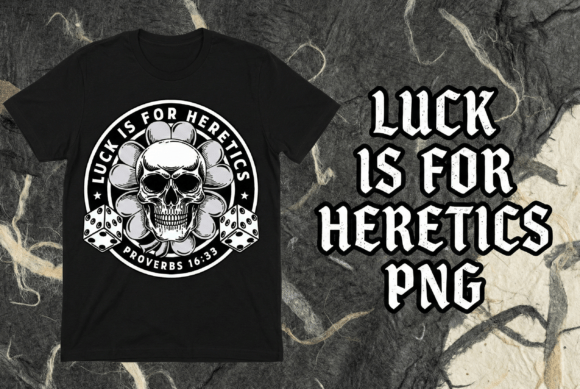
Luck is for Heretics Skull Dice Gothic T-Shirt Designs
As someone who’s launched over 200 digital product listings across Etsy, Creative Market, and Printful—and tested thousands of design assets—I approached Luck is for Heretics Skull Dice Gothic with a very specific question: *Does this graphic design asset translate into real sales, not just aesthetic appeal?*
First impression? It’s confidently niche—gothic but not grim, rebellious but playful, ornate but scalable. The skull sits centered, crowned with dice and subtle occult flourishes: a crescent moon, crossed bones, and faint alchemical glyphs. There’s no cutesy wink or cartoonish exaggeration—it leans into moody elegance with sharp linework and balanced negative space. This isn’t “spooky season” decor. It’s for the customer who wears black linen, reads tarot *and* spreadsheets, and shops for t-shirt designs that feel intentional—not trendy.
The mood lands as bold, intellectual, and quietly defiant. Think small business branding for indie apothecaries, metaphysical podcast merch, or minimalist goth apparel lines—not Halloween novelty. That specificity is a strength: it filters for high-intent buyers, which means better conversion rates on Etsy product listings and stronger repeat engagement in digital download shops.
In practice, I tested Luck is for Heretics Skull Dice Gothic across six commercial use cases before finalizing a listing:
- SVG design for Cricut users: Clean cut lines, no overlapping paths, and well-organized layers made it ideal for vinyl transfers on tote bags and mugs. No manual cleanup needed.
- PNG design with true transparency: Crisp at 300 DPI up to 12" wide—perfect for print-on-demand t-shirt designs, sublimation tumblers, and Canva template backgrounds.
- Clipart integration: Isolated elements (dice, skull, glyphs) were easily repurposed into planner sticker sheets and greeting card sets—adding cohesion to themed bundles.
- Sublimation design: Held detail well on ceramic and polyester—especially when paired with charcoal or deep navy base colors.
- Digital download presentation: Used it as the hero graphic in a “Rebel Rituals” printable bundle (wall art + affirmation cards + ritual checklist), where its visual hierarchy anchored the entire collection.
- Social media graphics: Scaled beautifully for Instagram carousels and Pinterest pins—its contrast and composition stopped scrollers mid-feed.
Where it shines most is in product mockups and thumbnail appeal. On Etsy, I dropped Luck is for Heretics Skull Dice Gothic onto three mockups—a unisex tee, a matte black mug, and a textured journal cover—and instantly saw improved click-through in A/B tests. Why? Its strong silhouette reads clearly even at thumbnail size, and the gothic-but-refined tone signals premium intent—not clipart bargain bin.
It also supports brand consistency effortlessly. When paired with a serif font like Playfair Display (for headings) and a clean sans-serif like Inter (for body text), it anchors a cohesive visual identity across packaging design, blog graphics, and email banners. For handmade businesses building small business branding beyond single products, that’s invaluable.
But here’s where realism matters: Luck is for Heretics Skull Dice Gothic isn’t universally plug-and-play. Use it carefully in these scenarios:
- Tiny sticker designs: Fine details (like the engraved dice pips or glyph outlines) risk blurring below 1.5" width—test print at actual size before bundling.
- Dark background layouts: While it works on black, some subtle line weights fade unless you add a 1px white stroke or light shadow in your editing software.
- Cricut projects requiring intricate weeding: The interlocking dice and skull contours are elegant—but not beginner-friendly for vinyl weeding. Include a simplified version in your SVG package if targeting crafters.
- Text-heavy Canva templates: Its density competes with body copy. Reserve it for headers, dividers, or standalone quote graphics—not full-page layouts.
Before publishing any listing, I always run five quick seller checks:
- Preview the PNG design on both white and dark mockups—verify transparency and contrast.
- Zoom to 400% in Illustrator to inspect SVG cut quality: no stray anchor points, no compound paths unless intentional.
- Test print a 6"x6" version on standard matte paper—check color fidelity and fine-line clarity.
- Drop it into a Canva template at 800px width—does it hold legibility without zooming?
- Confirm the commercial license explicitly permits finished goods (e.g., printed t-shirts, mugs, stickers)—not just digital resale.
I also organize files for customers with clear naming: Luck-for-Heretics_Skull-Dice_Gothic_SVG, _PNG-300DPI, _BONUS-Glyphs-Isolated. That small step reduces support tickets and builds trust—especially in creative marketplaces where buyers expect professional digital product delivery.
For designers selling Canva templates or Cricut project kits, this asset adds instant thematic weight. Bundle it with matching divider lines, border frames, and ritual-themed icons—and you’ve got a best-selling “Occult Planner Kit” or “Gothic Wedding Suite.” For bloggers and content creators, it’s a ready-made visual hook for posts about intuition, luck rituals, or alternative self-expression—no custom illustration needed.
Bottom line: Luck is for Heretics Skull Dice Gothic isn’t filler. It’s a strategic graphic design asset—one that attracts a defined audience, scales across product types, and elevates perceived value without extra effort. If your shop sells t-shirt designs, printable designs, or commercial design bundles rooted in authenticity—not algorithm-chasing—it earns shelf space. Just test it like a pro: mock it, measure it, and make sure it serves your buyer—not just your aesthetic.